Wednesday, January 29, 2020

Hot Design Ideas for Your Home

We all want a little luxury in our lives, and staying up-to-date on current design trends is just one way to incorporate a bit of style into everyday décor. Whether you're just looking for a few new pieces to spice up your living room or you're ready to revamp the entire master bath, taking a few design cues from luxury real estate can be a great way to stay current and fresh.
Rather than sifting through countless magazines to stay abreast of these trends, check out our list of some of the biggest trends in recent years. 
Bringing Nature Inside: Elements from nature elevate home décor. Invite green plants into the house in all shapes and sizes. Lush ferns and delicate succulents create a sense of calm. Look to natural fibers for accent pieces, such as sisal and wool and organic shapes found in tree bark or rough-cut stone.
Brass Accents: Aged brass accents are popular for creating that vintage-inspired look. Add burnished bronze and brass pieces for a bold statement.
Mix and Match Metals: Don't be afraid to clash. Brass paired with silver and copper have been spotted in upcoming design trends. Metallic shades will add a retro flair to an otherwise dull room.
Stealth Electronics: Nothing feels more luxurious than the total integration of your home in the palm of your hand. Control your lighting, entertainment system and environmental controls, even your garage door, with just your phone. Integrate your security system as well. Several options are available that allow you to access strategically placed cameras in any room in the house.
Electronic Entry: Never get locked out again. Electronic integration continues to customize the residential market. Smart locks feature unique identification codes in a sleek touchpad. Available in many fine finishes, smart locks also boast high-end craftsmanship.
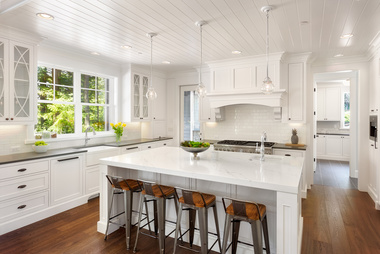
The Rustic Farmhouse: Farmhouse kitchens blend rural charm with modern design. Merging rustic touches with contemporary utility is on the rise in home renovation trends. Pair a farm-style tub sink with stainless steel appliances in an open floor plan to achieve this balanced style.
Library Retreats: Complete your luxury upgrade with your own literary sanctuary.  Advance your home office into a tranquil library to accommodate your interests. Unplug from modern life and sink into a relaxed pace, surrounded by priceless pieces of literature and culture.
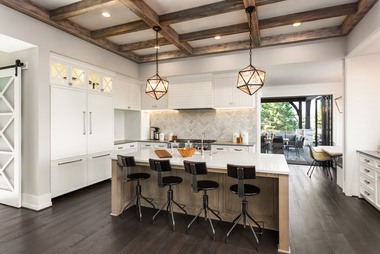
Luxury incorporates sophistication and technology with natural and timeworn accents. 

Wednesday, January 22, 2020

Cost vs. Value: 2020 Home Improvement Projects With the Highest ROI


I often have people ask me about what home improvements bring the greatest return on investment.  Today I  received an email from RISMedia's Housecall with the article below by Jameson Doris in it , and I thought you might be interested in it, too.   It's a 2020 report on home improvement projects with the highest return on investment (ROI) from a newly released Cost vs. Value report. 


Curb appeal really does have a major impact on the return you'll see at resale. Among the top 10 home improvement projects with the highest return on investment (ROI) in Remodeling magazine's newly-released Cost vs. Value Report, nine are outdoor projects.
Topping this year's list is Manufactured Stone Veneer, a project that has consistently ranked toward the top of the list since the project was added to the report in 2015.
Unsurprisingly, the report shows an increase in cost for all 22 projects listed; however, there is also a consistent dip across the board in terms of what the perceived value of each of these projects is. This is likely due to a market that was anything but smooth in 2019.
"Why the difference? The most likely answer is consumer jitters," says Clay DeKorne, chief editor of the JLC Group, which includes Remodeling magazine. "While remodeling professionals need to stay on point, they can breathe easy. Remodeling activity is growing at a slower rate than in years past, but it continues to grow."
Nationally, here are the 10 projects with the greatest ROI, according to the 2020 Cost vs. Value Report:
Manufactured Stone Veneer (95.6% ROI)
  • Average Cost: $9,357
  • Average Resale Value: $8,943
Garage Door Replacement (94.5% ROI)
  • Average Cost: $3,695
  • Average Resale Value: $3,491
Minor Kitchen Remodel (Midrange) (77.6% ROI)
  • Average Cost: $23,452
  • Average Resale Value: $18,206
Siding Replacement (Fiber-Cement) (77.6% ROI)
  • Average Cost: $17,008
  • Average Resale Value: $13,195
Siding Replacement (Vinyl) (74.7% ROI)
  • Average Cost: $14,359
  • Average Resale Value: $10,731
Window Replacement (Vinyl) (72.3% ROI)
  • Average Cost: $17,641
  • Average Resale Value: $12,761
Deck Addition (Wood) (72.1% ROI)
  • Average Cost: $14,360
  • Average Resale Value: $10,355
Window Replacement (Wood) (68.9% ROI)
  • Average Cost: $21,495
  • Average Resale Value: $14,804
Entry Door Replacement (Steel) (68.8% ROI)
  • Average Cost: $1,881
  • Average Resale Value: $1,294
Deck Addition (Composite) (66.8% ROI)
  • Average Cost: $19,856
  • Average Resale Value: $13,257
Nationally—and on the other end of the spectrum—here are the 10 projects with the lowest ROI:
Master Suite Addition (Upscale) (51.6% ROI)
  • Average Cost: $282,062
  • Average Resale Value: $145,486
 Grand Entrance (Fiberglass) (53.3% ROI)
  • Average Cost: $9,254
  • Average Resale Value: $4,930
Major Kitchen Remodel (Upscale) (53.9% ROI)
  • Average Cost: $135,547
  • Average Resale Value: $72,993
Bathroom Addition (Mid-range) (54% ROI)
  • Average Cost: $49,598
  • Average Resale Value: $26,807
Bathroom Addition (Upscale) (54.7% ROI)
  • Average Cost: $91,287
  • Average Resale Value: $49,961
Bath Remodel (Upscale) (56.6% ROI)
  • Average Cost: $67,106
  • Average Resale Value: $37,995
 Master Suite Addition (Midrange) (58.5% ROI)
  • Average Cost: $136,739
  • Average Resale Value: $80,029
Major Kitchen Remodel (Midrange) (58.6% ROI)
  • Average Cost: $68,490
  • Average Resale Value: $40,127
Roofing Replacement (Metal) (61.2% ROI)
  • Average Cost: $40,318
  • Average Resale Value: $24,682
Bathroom Remodel (Universal Design) (62% ROI)
  • Average Cost: $34,643
  • Average Resale Value: $21,463
The 2020 Cost vs. Value Report compared the average costs for 22 popular remodeling projects and how much of that value they retained in 101 different U.S. housing markets. View the full report, including project descriptions and city-level data, here.I received an email with this article in it and thought you might be interested in it, too.   


Monday, January 13, 2020

What is "Subject-to" Real Estate?

If you've heard people talk about "subject-to" real estate, you might be curious what that means and if it would be a good investment for you. Briefly, "subject-to" real estate means you're buying the property, but the loan on that property stays in the name of the existing seller.  You're making your purchase "subject-to" the existing mortgage or lien.
Image by Ricarda Mölck from Pixabay

Why Would Someone Buy Real Estate This Way?

When you buy a "subject-to" property, you don't have to get a mortgage in your own name. That can be perfect for people who don't want to tie up their credit or funds.  It also works well for those who might not be able to qualify for an existing mortgage.  Since you're not putting your name on anything that involves the mortgage, you're free and clear from that standpoint. But you'll own the house, and you'll make the mortgage payments.

Is This a Good Wealth-Building Tool?

This can be a great tool to build wealth when it's used correctly. It's very important that you continue making the seller's mortgage payments on time, and that you get everything in writing. But since you don't have to qualify for a mortgage yourself, you can choose great properties that people really want to sell. Often, this is because the owner is in foreclosure. By buying the property "subject-to", the owner doesn't have to go through foreclosure proceedings and have that on their credit report.

How Much Risk is Involved in This?

As with any type of investment, there is always risk. The biggest concern is that the seller of the property will file for bankruptcy. When that happens, the house could be included in that filing and would be foreclosed upon by the lender. You could lose your investment, since you aren't the one who has the property's mortgage in your name. Another risk is the due-on-sale clause in the seller's mortgage. Almost all mortgages have these, but they're often not enforced. Still, if the lender wanted to enforce that clause, they could demand that the entire mortgage be paid if the deed transfers into your name.

How Many "Subject-to" Properties Can Someone Own?

Theoretically, there's no limit to the number of "subject-to" properties that you could own. As long as you can make the payments, you can keep buying these properties. You don't need any credit to get started, and you won't really need much cash, either. You'll simply have to be willing to take a little bit of risk to build up your real estate portfolio. With that in mind, though, it's not a bad idea to have an attorney help you, at least right at first, to be sure you're protecting yourself and the seller as much as possible.

Saturday, January 4, 2020

Prepping Your Home for Sale

s you prepare to put your home on the market, consider prioritizing the tasks that will make your house sale-ready on a budget:
  • Clean and remove clutter from your house. Empty spaces encourage potential buyers to imagine themselves living there and a clean house looks well cared for. Remove clothes from your closet to show buyers they will have more than enough storage space.
  • Add curb appeal. Spend some time tending to your exterior. Focus on trimming bushes and trees, weeding flower beds, repairing gutters, fixing peeling paint, putting in new mulch or gravel, weeding and repairing driveways and walkways, and installing decor like wreathes, pots, and house numbers.
  • Paint walls neutral colors. Now it’s really time to say goodbye. Your home may lose some of its character in white, but it’s more appealing to a wide variety of buyers. People can also tell when a coat of paint is fresh and new!
  • Make home repairs before you show the house. Focus your attention on things like leaking faucets, loose doorknobs, stained tiles and grout, running toilets, broken windows, and burned-out light bulbs
  • Do small updates to spruce up your home for a dime. Ensure that the appliances match, get new cupboard knobs, or stick on new wall tiles. Small design touches go a long way.
  • Give each room a well-defined purpose. Potential homebuyers find it inspiring. Even if you’ve been using the room for many tasks, pick one to showcase.
  • Check the flow of your house. Ensure that furniture is not blocking people’s paths.
  • Create a blank canvas. As with the simple wall colors, keep the decorations simple and free of personal items. The goal is for potential buyers to be able to imagine their own decorations in the house.
  • Open the curtains. Let light in and turn on inside lights, and include some potted plants for a bit of green.
  • Produce good smells in your home. Avoid cooking bacon, microwave popcorn, or anything with a lingering smell on the day of an open house. Instead, use the morning to do some baking.
Taking a critical eye to your house can help you identify many areas that need improvement. Prioritize this list to make your house move even faster on the market. If you want more suggestions, give me a call today.

Monday, December 16, 2019

Everything You Need to Know About Insulation

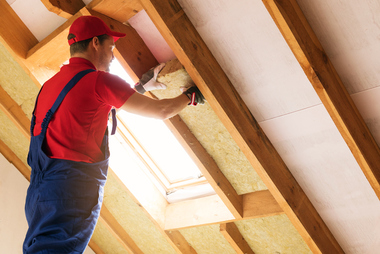
Insulation is a simple concept. It keeps your home warm in the winter. Did you know it also keeps your home cool in the summer? And did you also know that what you have may not be doing a good enough job? We don't often reevaluate our insulation, so it might be a great time to take another look and make sure you have the solution you need. 
Energy Efficiency
Did you know that the insulation of your home makes up about 40% of its energy efficiency? Gaps, holes and other areas where air escapes or comes into the home when not needed can all play a factor in how well your home is heated and cooled. 
Mold Problems
Insulation, including fiberglass and cellulose, can produce mold. Fiberglass itself doesn't encourage mold growth, but it can get dirty, and that dirt can be a breeding ground for spores. How well your insulation is sealed to prevent water infiltration will go a long way to preventing mold. 
Your Attic
Do you remember your mom telling you that you lose most of your heat through your head, and that's why you should wear a hat in the winter? While that's an old wives' tale, your house does suffer from a similar phenomenon. Homes without adequate insulation will lose a lot of heat through the attic, which can affect your overall home efficiency. 
Types of Insulation
There are a number of materials that are used for insulation. They all have a variety of pros and cons that you'll need to weigh before making your choice. The most popular materials are: 
  • Fiberglass.
  • Mineral wool.
  • Cellulose.
  • Polyurethane foam.
  • Polystyrene. 
Before you decide which one works best for you, we encourage you to review the products and talk to experts. 
Venting
Your insulation choice needs to be paired with the proper kind of venting to make it work. If there is too much moisture, you run the risk of mold. But if you have no ventilation at all, you've created a closed system that won't be able to properly vent hazards such as carbon dioxide. Pairing your insulation with proper ventilation will be essential. 
The R-Value
Lastly, we should mention the most common rating system for insulation. You'll see that manufacturers refer to their products by the R-value. This is the capacity by which your insulation can resist heat flow. The higher the number, the more insulative your material is.
Keep in mind that the specific R-value number you need will vary based on your location. Minnesota has very different insulation requirements than Southern California does, for example. 

Monday, November 18, 2019

Save Money and Conserve Energy

Have you thought about the ways you can save money and energy in your home? It's easier than you think and doesn't have to cost you a fortune. Some options may have larger upfront costs but will pay for themselves quickly. Here are just a few things you can consider to conserve energy in your home. 
Programmable Thermostat
If your home still has an old-school thermostat, it may be time to upgrade. A programmable thermostat can give you the ability to set times for when the heat or air conditioning goes up or down, depending on your schedule. And you don't need to do anything — just set and forget. If you want to get really 21st century with it, there are now smart thermostats that you can connect to from your phone and control even when you're not home. 
Ceiling Fans
Something as simple as installing a ceiling fan can help you save energy. It moves air around your home, increasing circulation and allowing your furnace or air conditioner to run less. Ceiling fans aren't useful only in the summer. Most have a setting for winter, too, which will push the warmer air down, so your heat is more efficient. 
Appliances and Fixtures
Many years ago, appliance manufacturers began selling appliances with the sole purpose of efficiency. For example, an energy-efficient dishwasher or washing machine will use less water to get your dishes or clothes clean. And you can also install fixtures to help with water conservation, such as low-flow toilets or showerheads. 
Change Your Lightbulbs
Simply changing out your lightbulbs from the old incandescent, or even the more recent fluorescent, can help. Today, LED lightbulbs are much more affordable than they once were, and they use a fraction of the energy. They also last longer, which can help your budget in the long term. 
Insulate Your Home
Have you checked out your insulation lately? It's probably not something you've thought about recently, but it's a good idea to look at what you have to work with. Certain types of insulation are better than others. And some people don't realize that their home isn't as efficiently insulated as it could be. 
I hope these tips were useful for you.  Call me with your real estate questions or to help you buy or sell a home. 

Monday, October 28, 2019

4 Tips for Upgrading Your Kitchen on a Budget

After living in a home for a few years, you might start itching for a kitchen upgrade. However, it can be difficult to come up with a list of kitchen upgrades that you can complete on a budget. The average kitchen remodel costs nearly $20,000—a figure that is far beyond the reach of the average family on a budget. Instead of doing a full kitchen remodel, consider taking advantage of some of these affordable kitchen upgrades that will not break the bank.
1. Replace Outdated Light Fixtures
One of the most obvious signs of age in your kitchen is a dated light fixture. A brightly colored pendant light will give your kitchen a more modern look. These can be found online at surprisingly affordable prices. Taking some time to shop around is well worth your time. 
2. Install New Handles or Pulls for Cabinets and Drawers
Cabinet fixtures come in a wide range of colors and styles that include everything from traditional metal handles, such as copper or brushed nickel to trendy styles like handles that resemble tiny silverware. Replacing your cabinetry hardware is a quick, easy and affordable way to give your kitchen a facelift. 
While some people love trendy designs, carefully weigh your options before settling on something unusual. You might like it now, but how will you feel about it a year from now? You will not want to spend money replacing the handles again if you get tired of them or if the trend goes out of style.
3. Repaint Your Cabinets
If just replacing the hardware is not enough, consider repainting the entire row of cabinets. For the cost of a can of paint and a few hours of your time, you could have your kitchen cabinetry looking as good as new. Brand-new cabinets can be a costly upgrade, but freshly painted cabinets are almost as good at a fraction of the cost. 
4. Remove Cabinet Doors
If repainting your kitchen cabinets does not appeal to you, consider removing the doors entirely. Open-faced cabinets can instantly give your kitchen a more modern look. The one drawback to this strategy is that you will need to keep the contents of your cabinets neat and tidy in order for it to work. For this reason, many designers use open-faced cabinets on the upper levels and traditional closed cabinets on the lower levels.
Using one or all four of these strategies can help give your kitchen a facelift without breaking the bank or going over your budget on the project.