Tuesday, June 6, 2017

The Expenses of Replacing Major Appliances

Major household appliances take a licking over their life span. Your fridge, your dishwasher and your oven all typically last a decade or more. When it's time to replace them, here's how much you can expect to pay for each, depending on the brand and the features.

Replacing a Fridge – At Least $800 New

Fixing an older fridge typically costs between one and a few hundred dollars. Older models with the freezer box on top are the cheapest, but most people opt for the side-by-side freezer box combination nowadays.

Box-top refrigerators will cost you around $800 to $900 on the low end, and up to over $8,000 for WiFi-enabled and over-sized models. The average fridge today costs around $1,500.

Replacing a Stove – At Least $500 New

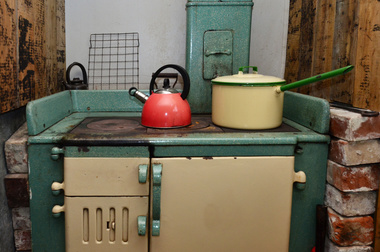
Replacing your oven can get a little more complicated than replacing a refrigerator. There are so many different options for oven ranges and stove top combinations. First, modern stoves in high-end homes have trended toward the stainless-steel variety that gives a contemporary look to home interiors.

But there are so many more possibilities. Some ovens come separate from the stove top and grill. Burners vary from the old-school grated burners to flat, gourmet-style grill tops. You can buy double ovens and over-sized grills and even WiFi-enabled ovens that work with a smartphone.

For standard ovens with none of the bells and whistles, expect to pay a minimum of $500 if you can get a good deal. For a high-end, top-of-the-line stove and oven, expect to pay upwards of $2,000 or $4,000, on average.

Replacing a Dishwasher – At Least $600 New

Dishwashers don't typically last as long as other major appliances and therefore can be replaced for around $250 to $600 dollars, on average. Even the more expensive stainless steel versions with WiFi-enabled technology will only run you around $1,000.

Replacing a Washer-Dryer – At Least $1,000 New

Lastly, your washer and dryer may need replacing one at a time. It could be that your dryer conks out before your washer, and vice versa. Repairs typically cost a few hundred dollars for either.

To replace an old-fashioned, top-loading washer will cost anywhere from $350 to around $500. For the more modern and efficient front-loading washer, expect to pay between $1,000 and $1,500 just for the washer. Newer models also come with high-tech features that can push costs up even higher.

Dryers are about the same price to replace as washers, with nearly as many options. An older model costs under $500, but fancier, trendy dryers can cost over $1,000.
The trick is to replace items before they completely die and then force you to buy something new quickly. Plan in advance and keep an eye open for sales. If you make a purchase when it's not urgent, you have a better chance of spending less than you expected.

Thursday, June 1, 2017

4 Signs It Might Be Time to Downsize

For years and years, we dream of the home we'd like to call our own. Your first home is usually cozy and warm, and then you start to have kids. This is typically the first time that homeowners believe that upsizing is necessary. Although the traditional notion for homeowners is that bigger is better, in some circumstances it might not be. As time goes on, there are more things you need to consider.
Read below to see the reasons you might think about downsizing your home.

Retirement
Approaching retirement is one of the most common reasons why homeowners think of downsizing. With retirement savings not lasting as long as most retirees expect due to the increased cost of living, and retirees needing more income because they are living longer, downsizing starts to sound like a great option.
Many retirees are hoping to stretch their retirement savings into the wee years of old age, so they are deciding to downsize their homes to save valuable cash each month.

Too much anxiety
Whether this anxiety is brought on by the physical upkeep of the home or other factors, once your home leads to more stress than it's worth, you may want to think about downsizing. Oftentimes, as they age, people are less able to care for their home the way they used to. Also, if one spouse passes on and the surviving spouse is left paying all the bills alone, it becomes hard to continue in a large home.
This may be the time to downsize — the price of a smaller condo or apartment is often easier for older people to manage, and the responsibility and cost of maintaining the home and most yard work surrounding the property is included in monthly fees. If your home is becoming a bit unmanageable, think about downsizing.

Unused space
If you feel like your home is swallowing you whole and you have a lot more space than you can easily use, it may be time for you to downsize. If unused rooms need cleaning because they are collecting dust and junk, it may be time for you to consider looking for a more realistic and manageable place to live. Maybe you can get a place with a pool that you can use often, or with a nice built-in patio grill to entertain.

Money opportunities
If your home has appreciated a lot and the money is for the taking in your neighborhood, consider downsizing and buying a nice luxury apartment with the money from the sale!

Monday, January 16, 2017

Hidden Ways You're Raising Your Energy Bills

Ever stare at your energy bill and wonder what is costing you so much money? Is it your kids' TV habits, or the washer or the dryer that is running up your energy bills? While your initial guess might be right — yes, your furnace and air conditioners are the biggest culprits of energy usage — you might be surprised by the amount of energy some of your smaller, everyday appliances are using.

1. Your Cable Box
While everyone has their never-ending list of must-binge TV shows, could you ever imagine that the cable box alone is one of the biggest energy hogs in your home? Whether or not you are watching TV, it is still using energy. A digital recorder estimates that the cable box in your home costs around $8 per month. Surprisingly enough, even if you have your box turned off, it's still using energy. TIP: Make a habit of unplugging your box at night; just don't forget to plug it back in when you're trying to watch TV again.

2. Gaming System
Second to the cable box comes the gaming system. While gaming systems are pretty energy-efficient these days, avid gamers spend approximately $40 extra per year on energy bills. TIP: Cut back gaming time.

3. Washer and Dryer
While some might think that paying $1.00 for a load of laundry at a Laundromat is expensive, the average homeowner spends around $400 per year just to keep their clothes clean and dry. A lot more than you thought, right? TIP: Since cutting back on the amount of laundry you do isn't the most efficient solution, try using energy-efficient appliances instead. While they may seem to present a pricey upfront cost, they will be well worth it in the long term. Upgrade your appliances to newer models for more savings in the long term. Also, try washing your clothes in cold water. To dry your clothes, add a dry towel to the load to absorb some of the moisture along the way, and cut the drying time in half.

4. Computers and Wi-Fi
In the technologically advanced world of today, computers and internet access are pretty much essential to daily life. While you're mindlessly searching the internet, answering emails and shopping online, it might quickly slip your mind how much you are spending to keep that connection going.
The use of computers and the internet costs on average $50 to $70 per year, which greatly varies depending on the number of users and what they are doing. Heavy video use and increased time online can all greatly increase this number. For individuals whose work relies on a computer and a strong internet connection, this number is likely much higher. TIP: How many times do you really need to view that video of the baby panda bears?

These are only a few of the appliances that raise your monthly bill — some more surprising than others. It's good to be mindful of your energy usage and keep it in control to maintain your energy costs.

Thursday, January 12, 2017

Understanding Escrow Accounts: What You Need to Know

Buying your first home can be overwhelming, and one of the most intimidating components is the escrow account. What is an escrow account, what is it used for and is it really necessary? Keep reading to learn everything you need to know about escrow accounts.

1. What is an escrow account? An escrow account is a separate bank account that your mortgage lender uses to pay your property taxes and home insurance. Each month, at the same time as you pay your mortgage, you will pay a little bit extra that goes toward the escrow account.
2. How does this benefit me? The money in this account will add up over time, and when your yearly property taxes come up, the money will be there in your account, ready to go. This can minimize the stress that comes along with a high property tax bill. It can work the same way for home insurance.
3. How does this benefit my lender? Legally, the bank owns the home, so it has a special interest in making sure everything is paid on time. In some states, if the taxes on the home are not paid, the government might hold the lender accountable for any unpaid portion of the taxes. The bank also has a vested interest in protecting its property, so one of their priorities is making sure there are no issues with the payment of your homeowner's insurance.
4. Do I have to have an escrow account? If this streamlining of payments doesn't appeal to you, some lenders will allow you to pay your own property taxes and homeowner's insurance. In most cases, you will have better luck avoiding an escrow account if you owe less than 80 percent of the home's value. The downside of this arrangement is that the interest rate on your mortgage will typically be higher than it otherwise would be if you agreed to an escrow account.
5. What are the negatives of an escrow account? If you are naturally good at saving money, you might not need the help of a forced savings account like an escrow account. People with variable income might also prefer to save up for yearly bills at their own pace.
6. What happens if I change my mind? The requirement for an escrow account is usually written into your mortgage paperwork, but this can sometimes be renegotiated with the bank. It is common for home loans to be sold multiple times over the life of the loan, and each loan holder will have different policies regarding escrow accounts. 
If you are unsure about whether an escrow account is right for you, make an appointment to talk to a loan specialist at your bank or give us a call.

Wednesday, January 4, 2017

What Happens to My Mortgage When I Die?

While death is a little bit of a taboo topic, you are not the only one thinking about it and wondering, "What happens to my mortgage when I die?" Unfortunately, the mortgage payments don't just disappear. Truth is, this is something you need to think about in the unfortunate case that your mortgage outlives you, because if you default on your payments, the lender could foreclose on your home. This is not something you or your family wants to happen, which is why it is always smart to plan for the unthinkable.
This type of planning is usually done with an estate planning lawyer, who can help you put together a plan that will pass down your home to your children, grandchildren or whomever it is that you choose. Unfortunately, they don't just get a free home (unless of course it is paid for in full) — they also get the remaining mortgage payments that come with it.
If you mortgaged the property with a co-borrower, then the payments defer to them. The co-borrower would become the legal primary owner of the property and would reserve the right to live in it, under the assumption that they continue making payments and stay up to date with them. They also have the legal right to refinance the home or sell it. These laws tend to vary state by state, so make sure to double-check which apply to you.
If you don't have a co-borrower, then the co-signer takes the reins and decides what happens. This person then becomes responsible for making payments, selling the property or whatever it is that they choose to do. Just make sure the co-signer is aware of this and notifies the lender of the change, rather than just mailing in checks every month.
In the absence of both, you should be sure to designate a beneficiary of the property. This person would then become responsible for continuing payments or selling the property, same as a co-signer or co-borrower.
If you are nervous that the person you are leaving the property to might not have the funds to maintain it, consider adding some insurance. Options include life insurance or mortgage life insurance, also known as mortgage protection insurance, in order to assist the individual with payments and additional expenses.
In either case, the best plan of action is to prepare and be prepared for when the unthinkable happens. Draft a will or a trust and put all your wishes into writing. This is the best way to ensure that your assets will not only go to the individuals you choose, but also guarantees there won't be any family arguments on who gets to keep the house or who gets burdened with the mortgage payment. Protect yourself and protect your loved ones. If you need assistance or further insight, feel free to give me a call. I'm always here and happy to help. 

Tuesday, December 27, 2016

Expert Tips for Getting the Best Mortgage Rates

Here are five expert tips you can use for getting the best mortgage rates.
 
Shop around. Different lenders can offer drastically different rates. It is best to explore options at your regular bank and other banks and local credit unions. A larger down payment can increase your options as far as loan types.
 
Know the differences between fixed-rate and adjustable-rate mortgages. There are two common types of mortgages: fixed rate and adjustable rate. A fixed-rate mortgage will have the same interest rate for the life of the loan — the only way to change it is to refinance. An adjustable-rate loan, on the other hand, will fluctuate along with the market rate. These loans usually begin with a fixed-rate introductory period, usually one to 10 years, and then will change based on the bank's interest rate index. Typically, these rates will be based on the prime interest rate plus a certain constant percentage.
 
Which type of interest rate is better? Adjustable-rate mortgages can be appealing since they can have very low introductory interest rates, but if you choose to go this route, prepare yourself for the possibility of a rate increase after the introductory period expires. If interest rates are fairly low at the time, a fixed-rate loan can be a good idea. When interest rates are low, a future increase is very likely. Alternatively, if interest rates are high, most people will expect them to drop in the future. When this happens, you might want to consider refinancing or you will end up paying an interest rate that is higher than the current market rate.
 
Maximize your credit score. The higher your credit score, the lower the interest rate will be on your mortgage. One important part of this is paying off debt. Your debt-to-income ratio is an important factor in determining your mortgage interest rate.
 
Decide whether you want to pay for points. Buying a point — usually by paying a fee of 1 percent — will lower your long-term interest rate by a set amount — usually 0.125 percent. This may seem like a very small amount, but it can add up over the life of the loan. If you are planning to keep your home for a long time, paying for points can be a solid financial strategy. Average homeowners, however, will live in their home for nine years. On this shorter horizon, the upfront cost will usually be greater than the long-term interest rate savings. If you aren't sure how long you will live in the home, it is usually best to skip paying for points.
 
You might also be presented with the option to select negative points. This is exactly what it sounds like — a higher long-term interest rate but lower upfront fees. Carefully weigh your options before settling on a strategy.

Monday, December 19, 2016

Is the Home Office Tax Deduction for You?

One of the best and often overlooked tax deductions is the home office deduction. While this won't reduce your IRS payment to zero, it can still provide a lot of added value, especially for those working from home or running a business out of their spare bedroom. Just make sure to use it correctly.
For starters, it requires no additional outlay. Unlike many other deductions that require you to invest in something or spend additional money in order to qualify, the home office deduction does not. It is just a matter of shifting perspective. What you would normally see as a non-deductible expense, such as a business-related internet bill or new printer, could indeed be a write-off. Take some time to think about items that you also use for business that could fall into this newly discovered category.
Best of all, it's very easy to claim and requires little to no advance planning. While you're at it, you can even claim write-offs from last year's tax expenses, if you haven't already. Simply file an amended return for your last year's tax return and claim a tax refund. Again, just be sure you are making claims on justifiable items. Here are a few tips to keep in mind:
1. Make sure your office space is exclusive
This means that you cannot use this space for anything else. For example, if you happen to do work in your dining room but also eat dinner here every night, it would not qualify. This space needs to be used for business activities and nothing else. (There may be an exception to this restriction if you use part of your house as a licensed day care facility.) Don't challenge the IRS, they will win. I promise you.
2. The space claimed must be your primary place of business
Now, this doesn't mean that it's the only place of business, it just means that it's the principal place of business — it's where majority of your work is done, but again, not necessarily all your work. This is usually what stops people from claiming their home office as a tax-deductible expense because they think of the other places they also work, but this is not the case. As long as you spend 51 percent of your time here, it counts. Regardless of where the other time is spent.
3. Don't fear the IRS
While many myths claim that home offices are an IRS audit flag, that is not the case. In today's day and age, almost half of Americans have home offices. The issue is that less than half of those people are claiming them as deductions because of the fear of being audited. Don't be one of those people. Don't let the IRS take more of your hard-earned money. Claim what is rightfully yours, and write off all those business-related expenses.
The final piece of advice is to consult with a tax professional, who can address your particular situation, and which deduction method (regular or simplified) is right for you, and confirm what expenses are in fact tax deductible.